

Pipeline SCADA Control Room Management Regulations and Point-to-Point Verification

Introduction
US, and Canadian, pipeline operators that operate pipelines in the US, must comply with the regulatory requirements for Control Room Management (CRM) in CFR 49 192.631 & 195.446. The CRM rule created many challenges for pipeline operators and the industry has responded to meet the regulations and provide for safer operation of pipelines from their control rooms. One of the more challenging aspects of compliance with the regulations is the point-to-point verification requirement. Ongoing efforts continue to provide solutions that make compliance easier and more efficient for current systems in the field today.
Point-to-Point Verification Rule
The original proposed CRM rule recommended a complete point-to-point verification of all points in the SCADA system. Due to concerns raised by many pipeline operators that this process was too onerous, overly expensive, and could take years to finish, if ever, the final rule was adjusted to require point-to-point verification only when field equipment is added or moved and when other changes that affect pipeline safety are made to field equipment or SCADA displays. This created the need for operators to analyse their SCADA points to determine which points where safety related.
Canadian Regulations
In Canada, the Canadian Energy Pipeline Association (CEPA) has ‘levels’ of certification which are recognized in the industry. For example, to maintain higher levels of CEPA compliance, all points on a pipeline not only have to be commissioned during times of change (creation, modification), but have to be subjected to periodic (quarterly, annually) commissioning in order for the system to be in ‘compliance.’
Triggers for a Point-to-Point Verification
Changes to instrumentation, configuration of telemetry points, programming of PLC/RTUs, changes to piping, or updates/upgrades of a SCADA system will trigger point-to-point verification for compliance. Changes to field equipment (like a Motor Operated Valve “MOV”) require testing of all commands and readings for that piece of equipment (e.g. open/close commands and indications, hand/off/auto, etc.). This would also include changes to calculated (software generated) points that are safety-related, for example:
- Replacing a transmitter requires testing that transmitter, validating setpoints, tag names, alarm indications, and graphical placement.
- Changes to piping require updates to any hydraulic models and leak detection algorithms.
What about a SCADA HMI Change?
One challenge pipeline operators face is that if changes are made to a SCADA display only with no change to field equipment, PHMSA still requires a point-to-point verification between the SCADA display and related field equipment. In this case, verification must ensure that no unintended errors have occurred during changes in SCADA displays. Procedures may be different from a full end-to-end check as no change has taken place in the field
Verification Logistics
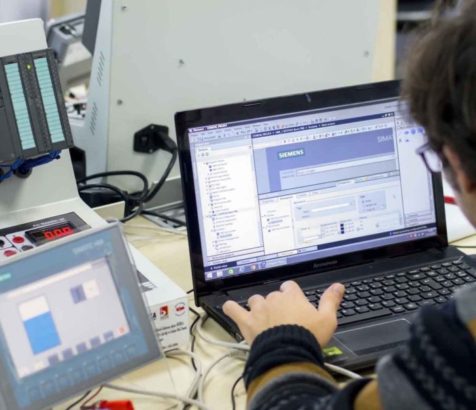
The point-to-point verification requirement has evolved into a major wok flow process that requires a coordinated effort of a number of key pipeline personnel including, Project Managers, Project Engineers, SCADA Administrators, PLC/RTU Programmers, Field Operators, Construction Crew, Control Room Operators and Managers, and auxiliary critical software support personnel like Leak Detection software.


Typical Verification Testing
The impact of point-to-point verification on SCADA operations needs to be highly managed. Below is a list of typical verification/commissioning testing:
- Bench/Development Testing – before ‘on-site’ work commences, development and testing of the PLC program can be implemented.
- Individual Point Input & Output (I/O) Testing
- Datatype Testing
- Numerical Testing
- Range Testing
- Scale Testing
- Digital (status) Testing
- Accumulator Threshold and Rollover Testing
- Command Testing – Commands initiated from the correct operational display/control are verified according to the standard testing procedures involved and the result achieved.
- Soft and Digital Alarm Testing
- Function Testing – Operational ‘tasks’ that are generally not confined to individual points or commands (i.e. Unit Shutdown)
- Display Testing
- Communication Testing – While seemingly outside of the scope of ‘point-to-point verification/commissioning’, adding points to an existing PLC can interfere with existing communications in
- cases where channels/circuits are already at full capacity.
- Critical Application Testing, e.g. Leak Detection software
Documentation/Providing Evidence
In addition to internal procedures and check-sheet/logs, evidence must confirm that the input or output of each field instrument is accurately and reliably reflected in the SCADA information presented to the controller. Pipeline operators must document the field parameters, as measured in the field, and the corresponding SCADA display information, to record that the SCADA information displays accurately reflect field measurements.
The date and names of individuals involved in the verification should also be recorded as a means to help demonstrate thoroughness and authenticity. Alarm set-point values should also be checked at the same time. Providing the reason for verification such as Initial Verification, SCADA HMI Change, Expired Verification, and Programming Change, can complement the engineering data collected.
Summary
By establishing and maintaining company’s Standards and Testing Procedures, the SCADA system benefits in the following ways:
- Improved Safety – Control room Operator has a full understanding that information presented is a clear and accurate picture of the remote situation and they have “adequate information” to properly operate safely end efficiently.
- Consistency – SCADA systems generally have a long life and span multiple years being worked on by multiple resources. A full scope point-to-point verification and commissioning process is a key part of maintaining consistency.
Dexcent is Ready to Discuss Your SCADA System Compliance Needs
Dexcent, with its rich Control Systems and SCADA experience, and deep understanding of the regulations required for compliance, would be pleased to discuss your SCADA system needs and issues related to point-to-point verification and commissioning. Using its technology, tools, and experienced technical personnel, Dexcent can help with your needs on this and other regulatory compliance challenges.
If interested, please complete our contact form, email our team at sales@dexcent.com, or call us directly at (780) 482 – 4100. Please visit us at https://www.dexcent.com/
About Dexcent
Founded in 2006, Dexcent Inc. is an engineering consulting and industrial automation company that provides a range of specialized solutions for clients in a variety of industries throughout the world. Our professionals have modernized IT and OT engineering methodologies into comprehensive solutions, specializing in information analytics, cyber security, infrastructure, and control systems engineering. As such, we pride ourselves on truly transforming industrial operations to optimize business performance and deliver bottom-line results.