For many pipeline operators, the real problem does not show up as a dramatic failure. The environment stays up. Control room operations continue. But behind that visible stability, maintenance gets deferred, support demand rises, changes get heavier, and more of the system depends on a shrinking pool of internal expertise.
This free executive guide shows why mature AVEVA Enterprise SCADA environments often fail economically before they fail catastrophically, and what leaders can do to protect long-term value, reduce avoidable demand, and improve support predictability.
No sales pitch. Immediate access.



Stop Letting Support Burden Quietly Erode SCADA Value
Traditional support models often keep Enterprise SCADA running without systematically making it healthier.
That is the hidden risk.
Internal-only support can preserve ownership while concentrating risk in too few people. Vendor-only support can provide product expertise without full operating context. Ad-hoc support can solve urgent issues without reducing future demand. Over time, the result is growing operational friction, rising support burden, and a platform that becomes harder to maintain with confidence.
This eBook will help you understand:
This is not a support brochure.
It is an executive guide to recognizing quiet degradation, reducing avoidable demand, and protecting the real value of AVEVA Enterprise SCADA.
What’s Inside the Guide

1. The Hidden Cost Curve of Ownership
Learn why Enterprise SCADA often becomes more expensive to trust long before it visibly fails, and how deferred sustainment drives rising operational drag.

2. Where Quiet Degradation Shows Up
See how drift appears in environment parity, failover readiness, documentation, recurring support issues, and reactive maintenance patterns.

3. Why Traditional Support Models Break Down
Understand the structural limits of internal-only, vendor-only, and ad-hoc support in long-life, high-consequence pipeline environments.

4. The Service Model That Protects Value
Explore the core service pillars that reduce avoidable demand, strengthen resilience, and make Enterprise SCADA healthier and more predictable over time.
1. The Hidden Cost Curve of Ownership
Learn why Enterprise SCADA often becomes more expensive to trust long before it visibly fails, and how deferred sustainment drives rising operational drag.
2. Where Quiet Degradation Shows Up
See how drift appears in environment parity, failover readiness, documentation, recurring support issues, and reactive maintenance patterns.
3. Why Traditional Support Models Break Down
Understand the structural limits of internal-only, vendor-only, and ad-hoc support in long-life, high-consequence pipeline environments.
4. The Service Model That Protects Value
Explore the core service pillars that reduce avoidable demand, strengthen resilience, and make Enterprise SCADA healthier and more predictable over time.


Built for Pipeline Leaders Managing Real SCADA Complexity
This eBook is designed for leaders responsible for keeping complex AVEVA Enterprise SCADA environments dependable under operational pressure. It is grounded in the real challenges Dexcent’s audience faces, including limited in-house expertise, reactive problem-solving, regulatory pressure, and the need for reliable, efficient control systems that support core operations.
Inside, you’ll get guidance rooted in issues such as:
“The most important question is no longer, ‘Is the system up?’ It is, ‘What is it costing us to keep it dependable, and is that cost rising faster than it should?’”
Get the Free Executive Guide
See where support burden builds, why traditional models fall short, and what stronger sustainment looks like.
Immediate access. No sales pitch.

Is This Guide for You?
This guide is designed for:
If you are responsible for keeping Enterprise SCADA stable, supportable, and economically healthy over time, this guide will help you identify the patterns that matter and evaluate what stronger Service and Support should look like.
Frequently Asked Questions
It is written for pipeline and operational leaders responsible for AVEVA Enterprise SCADA environments, especially SCADA Directors, Engineering Managers, Control Systems leaders, and operations leaders carrying reliability or OPEX accountability.
No. This guide is built to help leaders recognize quiet degradation, understand why traditional support models break down, and evaluate what disciplined sustainment should look like in a mature Enterprise SCADA environment.
You will get a clearer way to think about recurring support demand, Operational Debt, service-model gaps, and the practical service pillars that protect long-term platform value.
Yes. One of the guide’s key themes is that even strong internal teams face structural constraints when support demand, deferred maintenance, and tribal knowledge begin to compound.
You will receive the eBook immediately. If the ideas resonate, the best next step is a focused working session to assess where your environment is most exposed and which service priorities would create the highest return first.
Once You’ve Read the Guide, Take the Next Step
If your Enterprise SCADA environment is becoming harder to maintain, harder to change, or more expensive to trust, the next step is not a generic support proposal.
It is a focused working session to clarify where operational drag is accumulating, which service pillars would create the strongest return first, and whether a controlled Service and Support model fits your environment. That matches Dexcent’s positioning as a guide that helps industrial organizations make informed decisions, reduce risk, and improve long-term operational performance.
Sarah Burghardt is the President of Dexcent, responsible for the day-to-day leadership of the organization, enabling strong execution across teams and delivering exceptional value to customers. With a track record of building high-performing teams and strengthening delivery capability, she has been an integral part of Dexcent’s growth and evolution. Sarah is known for a leadership style grounded in authenticity, clarity, and collaboration, consistently embodying Dexcent’s core values of Integrity, Care, and Excellence. She brings experience spanning executive leadership, consulting, and business operations, helping organizations align people and priorities to achieve meaningful outcomes.
Andrew Capper is Vice President of Industrial Digital Transformation at Dexcent, helping industrial organizations improve data-driven decision-making by optimizing the data journey, reuniting siloed information, and delivering a trustworthy version of the truth.
With more than 25 years of experience, he is known as a results-driven leader who delivers on commitments and tackles complex information management challenges with a practical, human-centric approach. His work spans digital transformation strategy and roadmaps, governance, digital maturity assessments, and performance measurement through clear KPIs and metrics. Andrew is a NAIT graduate with training in Instrumentation Engineering Technology and Security Systems, and he brings a strong focus on safer, more effective operations from data producers through to data consumers

Nader Asgharinia, PMP, P.Eng., is Vice President of Enterprise SCADA & Advanced Applications at Dexcent, leading the delivery of complex, mission-critical solutions with a clear focus on client experience and operational excellence. With more than 30 years in business execution and over 25 years managing multi-million-dollar programs for mission-critical and SCADA systems, he brings a pragmatic, delivery-at-scale approach to every engagement. Nader is recognized for building high-performing teams, driving disciplined portfolio execution, and delivering measurable business outcomes, including significant growth in program portfolios and team capacity over time. He holds a B.Sc.(Hons.) in Electrical and Electronics Engineering from the University of Newcastle-Upon-Type in the UK, a B.Sc. in Computer Science from the University of Calgary, completed Georgetown University’s Director’s Program, is a Professional Engineer in Alberta, and a Project Management Professional.
Tobias (Gerrit) Nel, CISSP, CISM, is Vice President of OT Infrastructure and Cyber Security Services at Dexcent, leading the development and delivery of practical services and solutions that integrate, complement, or replace OT infrastructure and protect OT assets from cyber threats. He is known for building resilient security frameworks, governance processes, and integrated solutions that reduce risk and support compliance across diverse industries. Gerrit has over 40 years of relevant IT/OT experience and has built and delivered highly skilled and high-performance delivery teams. His strengths include Cyber Security roadmaps, security architecture, incident response, and alignment to standards such as IEC 62443, NIST, and NERC CIP. Furthermore, he has deep foundational technical experience in Networking and OT infrastructure systems architectures that he leverages in building and leading successful delivery teams. Gerrit holds a B.Sc. in Computer Science from the University of Johannesburg and brings deep cross-sector experience supporting clients in oil and gas, mining, chemical, healthcare, financial, and government environments.
Karim Amarshi is Chair of Dexcent’s Board of Directors, providing governance leadership and strategic oversight to support the company’s long-term strategy and executive team. With nearly 40 years as an entrepreneur and owner-operator, he is recognized for building high-performance organizations and forging strategic alliances across Information Technology, government, health care, education, and energy. He is the former co-owner and Chief Executive Officer of one of Canada’s leading enterprise Information Technology solution providers, where he led the organization through three successful mergers and helped scale long-term client and vendor partnerships. Karim remains active across a diverse business portfolio, serving as a founding principal, officer, and advisor to organizations spanning Information Technology, hospitality, manufacturing, retail, and real estate in Canada and internationally.
Yasmin Jivraj, FCIPS, I.S.P., is a Board Member at Dexcent, providing executive guidance and strategic oversight to support corporate management and long-term business direction. Over a 35-year career, she has held senior leadership roles across private, public, and non-profit organizations, with a track record of building operating foundations and driving profitable growth. Following a 15-year tenure as a co-owner and President of one of Canada’s leading strategic Information Technology solution providers, she expanded her governance leadership through active board service in post-secondary education and community-focused organizations. She is recognized for decisive, purpose-led leadership, clear communication, and deep expertise in technology, business models, and methodologies that help enterprise organizations advance digital transformation.
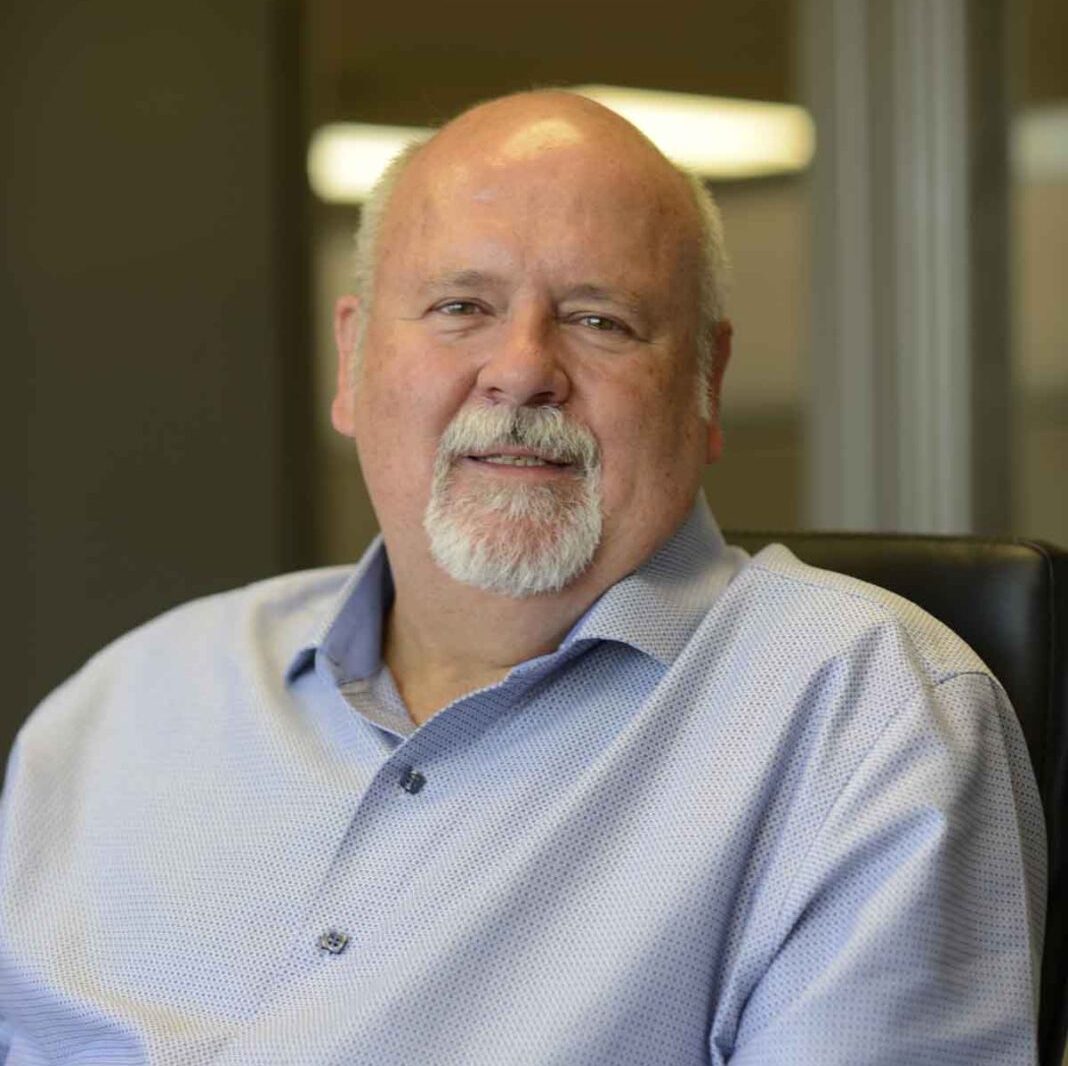
As Chief Executive Officer, Nadir is accountable for providing overall leadership and Dexcent’s Industrial operational performance. Nadir has been involved as an executive sponsor with Oil & Gas and Mining companies for over 35 years, and through the years has developed a strong working relationship with the Executive leadership team of many Fortune 500 companies.
Nadir is known for recognizing value and superior investment opportunities in the technology services sector. His pursuit of highly prospective technology companies around the world has resulted in numerous company start-ups. Prior to starting Dexcent, Nadir had led companies through highly profitable business transactions, including the merger of Atlas Systems Group with CompCanada (later renamed Acrodex) in 2000 and later as Chairman of the Board of Axcend Pvt – an engineering solutions provider – based in Bangalore, India from 2004 – 2014. Acrodex and Axcend were sold in 2015