
The Three Assessment Paths Every Critical Infrastructure Leader Must Understand
Many critical infrastructure leaders recognize that they need a Cyber Security assessment. The challenge is not awareness. The challenge is clarity. With so many assessment types available, it becomes difficult to determine which one answers the question your organization is actually trying to solve.
This confusion slows progress. It leads to misaligned expectations. It results in wasted effort, unnecessary cost, and frustration among operations, engineering, and security teams. Leaders often ask for the wrong assessment, or begin with an assessment that does not address their actual concerns. In OT environments where time, resources, and maintenance windows are limited, choosing the wrong starting point creates avoidable setbacks.
There are three primary assessment paths that support Cyber Security resilience in critical infrastructure. Each one answers a different question. Each one serves a different purpose. Understanding the difference between these assessment types is essential for choosing the right path forward.
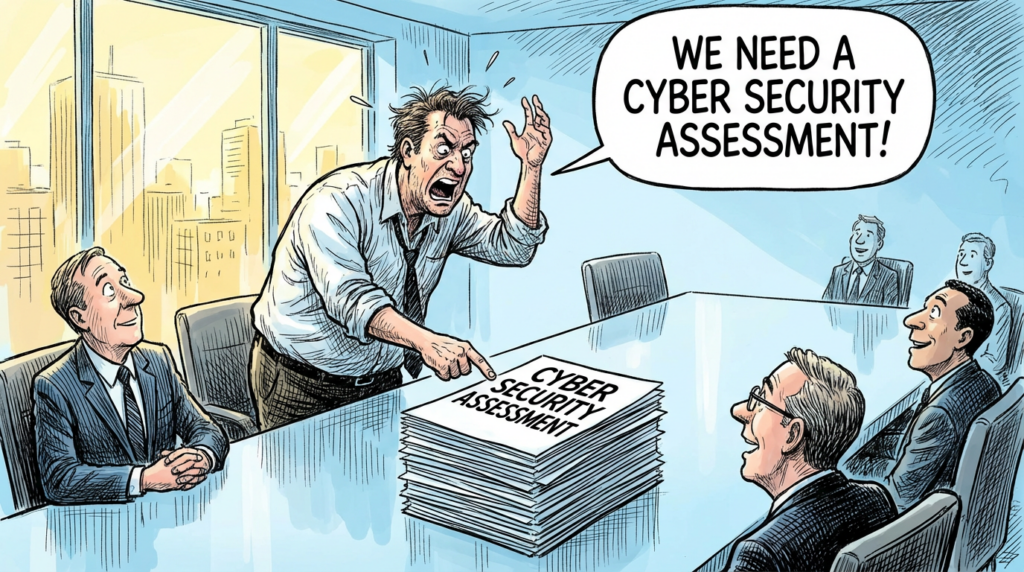
The Confusion Problem: One Word, Many Meanings
When someone says, “We need a Cyber Security assessment,” it could mean many things. For example:
- Are we compliant with regulations?
- Are we mature enough to defend our OT environment?
- Where are we most exposed to risk?
- Are we ready for an audit?
- What improvements should we prioritize?
- How effective are our Cyber Security practices?
Different questions require different assessments. There is no single assessment that answers all of them. Leaders often assume that one assessment type can address every need, which is why confusion is so common.
Understanding the three main assessment categories eliminates this confusion and helps leaders make informed decisions.
Assessment 1: Posture or Maturity Assessment
A Posture or Maturity Assessment evaluates Cyber Security capability across people, processes, and technology. It does not focus on compliance or risk alone. Instead, it examines how well your Cyber Security practices function in real life, across the entire OT environment.
This type of assessment answers questions such as:
- How effective are our Cyber Security controls?
- Are our processes consistent and repeatable?
- Do teams understand and follow documented procedures?
- Does governance support execution or simply describe it?
- Where do we have gaps in capability?
This assessment is best for organizations that want a holistic view of their Cyber Security strength. It is the right choice when leaders need clarity on their current state before investing in new controls, tools, or transformation initiatives.
A posture or maturity assessment provides a baseline that can be used to measure progress over time. It reveals the strengths and weaknesses that influence both compliance and operational resilience. It helps leaders avoid guessing, avoid unnecessary spending, and align their Cyber Security efforts with real capability rather than assumptions.
Assessment 2: Compliance Readiness Assessment
A Compliance Readiness Assessment focuses on verifying whether an organization is prepared to meet the expectations of a specific regulatory or standards-based framework. For Canadian critical infrastructure organizations, these frameworks often include:
- NERC CIP
- NIST Cyber Security Framework
- ISO 27001
- IEC 62443
- TSA Pipeline Security Guidelines
This type of assessment answers questions such as:
- Are we ready for an external audit?
- Can we produce evidence for every required control?
- Do our documents reflect our actual practices?
- Where do we have compliance gaps that need immediate attention?
This assessment is not about measuring maturity. It is about verifying that controls, processes, and documentation meet regulatory expectations. Leaders choose this assessment when they have an upcoming audit, certification requirement, or regulatory deadline.
A compliance readiness assessment helps organizations avoid surprises during audits, reduce the risk of nonconformities, and streamline remediation. In critical infrastructure sectors where compliance has direct operational and regulatory implications, this assessment is essential.

Assessment 3: Cyber Security Risk Assessment
A Cyber Security Risk Assessment evaluates threats, vulnerabilities, and business impacts within the OT environment. It focuses on the adversarial side of Cyber Security by identifying what could go wrong, how it could happen, and what the operational consequences would be.
This type of assessment answers questions such as:
- What are the highest Cyber Security risks in our OT environment?
- Which threats are most relevant to our sector?
- What would happen if a critical asset or system were compromised?
- Where are we most vulnerable to attack?
- Which improvements would reduce risk most effectively?
This assessment is ideal for leaders who need to understand operational exposure, business impact, or potential pathways adversaries could exploit. It helps organizations prioritize improvements based on risk, not assumptions or convenience. It is especially valuable for organizations that need to justify Cyber Security investments to executives or boards.
A risk assessment provides a lens that is different from both posture assessments and compliance readiness checks. It focuses on what could harm the organization and how that harm can be prevented.
Why Choosing the Wrong Assessment Creates Waste
When leaders ask for an assessment without understanding the differences, several problems occur:
- Teams receive results that do not answer their actual questions.
- Remediation efforts become scattered and unfocused.
- Budget is spent on activities that do not reduce meaningful risk.
- Compliance challenges remain unsolved.
- Operational teams lose trust in the process.
- Leadership becomes frustrated with unclear outcomes.
For example, an organization might request a compliance readiness assessment when what they truly need is a maturity assessment. The result would be a list of compliance gaps, but not a full understanding of capability. Conversely, requesting a maturity assessment for an upcoming audit would delay necessary compliance activities.
Choosing the wrong assessment creates misalignment that slows progress and increases cost.

How Leaders Can Choose the Right Assessment
Leaders can identify the right assessment by asking three simple questions:
Question 1: Are we trying to understand our capability or our compliance status?
Capability requires a posture or maturity assessment.
Compliance status requires a readiness assessment.
Question 2: Are we preparing for a regulatory or certification requirement?
If the answer is yes, begin with a compliance readiness assessment.
Question 3: Are we trying to understand risk or justify investment?
If so, a Cyber Security risk assessment is the most appropriate starting point.
These questions help organizations avoid confusion and choose the assessment that aligns with their goals, constraints, and operational reality.
Each Assessment Supports a Different Part of the Cyber Security Journey
Posture or Maturity Assessment = Capability
Compliance Readiness Assessment = Confirmation
Cyber Security Risk Assessment = Prioritization
Roadmap = Execution
Resilience = Outcome
When leaders understand this progression, they can plan their Cyber Security journey with clarity and confidence.
A Logical Next Step
If this article clarified some uncertainty, the deeper dive can be found inside Dexcent’s full ebook, The Pathway to OT Cyber Resilience. The guide explains:
- The difference between posture, readiness, and risk assessments
- How to build a Cyber Security roadmap
- The compliance readiness gap in Canadian critical infrastructure
- Real incidents that illustrate the cost of inaction
- What resilience looks like in OT environments
You can access the complete guide through Dexcent’s resource library.