Webinar: Bridging IT–OT Gaps: OT-Led Data Transformation in Action

Breaking Down Barriers to Data Readiness: A Practical Guide for Industrial Operations

Introduction: The Challenge of Data Readiness

In industrial operations, the promise of efficiency, innovation, and scalability often hinges on one critical factor: data readiness. Yet, many organizations face significant barriers that prevent their data systems from meeting the demands of modern technologies and evolving market conditions.

These challenges aren’t just technical—they’re often rooted in culture, strategy, and infrastructure. The good news? Every barrier can be overcome with the right approach.

This practical guide will explore the common roadblocks to achieving data readiness and provide actionable steps to help industrial organizations break through them.

Common Barriers to Data Readiness

1. Fragmented Data Systems

Many organizations operate with data scattered across legacy systems, spreadsheets, and siloed platforms. This fragmentation makes it nearly impossible to achieve a unified view of operations or make data-driven decisions.

Example: A manufacturing company using separate systems for inventory, maintenance, and production scheduling struggled with inefficiencies and inconsistent reporting. Without integration, their teams couldn’t trust the data they relied on.

2. Lack of Governance and Accountability

Without clear policies and roles to manage data, inconsistencies and errors creep in. When no one is responsible for maintaining data integrity, accuracy becomes a recurring challenge.

3. Resistance to Change

Implementing data readiness often requires a cultural shift. Teams may be hesitant to adopt new tools or processes, especially if they’ve relied on manual systems or outdated methods for years.

4. Limited Scalability

Systems designed for yesterday’s operations can’t handle the growing complexity of today’s industrial demands. As organizations scale, data systems that aren’t built for growth lead to bottlenecks and inefficiencies.

5. Misaligned Technology Investments

Without a clear strategy, many organizations invest in technologies that don’t align with their existing infrastructure or long-term goals, resulting in underutilized tools and wasted resources.

The Cost of Inaction

Failing to address these barriers can have widespread consequences:

  • Lost Productivity: Employees spend more time searching for data than analyzing it.

  • Missed Opportunities: Poor data prevents organizations from identifying trends or acting on insights.

  • Competitive Disadvantage: As competitors embrace data readiness, organizations without it fall behind.

The question isn’t whether you should prioritize data readiness—it’s how you’ll get there.

Steps to Break Down Barriers

1. Conduct a Holistic Assessment

Start by evaluating your current data landscape. Identify where data resides, how it’s accessed, and where gaps or inefficiencies exist.

2. Prioritize Integration

Break down silos by consolidating data into a unified system. This allows teams to access accurate, up-to-date information across departments, driving collaboration and informed decision-making.

3. Implement Data Governance Frameworks

Define who is responsible for maintaining data accuracy and set clear policies for how data is collected, stored, and used. Governance ensures that your systems remain reliable as your organization grows.

4. Foster Cultural Buy-In

Change is often met with resistance, but it doesn’t have to be. Engage teams early by communicating the benefits of data readiness, offering training, and demonstrating how new systems will improve their daily work.

5. Invest in Scalable, Future-Ready Solutions

Choose technologies that align with your operational needs and can grow with your organization. Scalability ensures your data systems won’t be obsolete as your business evolves.

How Dexcent Helps Industrial Organizations Overcome Barriers

At Dexcent, we understand that achieving data readiness isn’t a one-size-fits-all journey—it requires tailored strategies that address your unique challenges and goals.

Our approach includes:

  • Maturity Assessments: Comprehensive evaluations to identify gaps and opportunities in your current data systems.

  • Data Governance Implementation: Frameworks that ensure long-term data integrity and accessibility.

  • Scalable Solutions: Systems designed to grow with your operations, ensuring you’re prepared for the future.

  • Cultural Transformation Support: Engaging teams and fostering buy-in to drive successful implementation.


We help industrial organizations strategize, transform, and evolve their operations by building a strong foundation of data readiness.
Conclusion: A Clear Path Forward

Breaking down the barriers to data readiness may seem daunting, but the rewards are undeniable. By addressing fragmentation, fostering cultural buy-in, and investing in scalable solutions, organizations can unlock the full potential of their operations.

Data readiness is more than a technical upgrade—it’s a strategic enabler for innovation, growth, and long-term success.

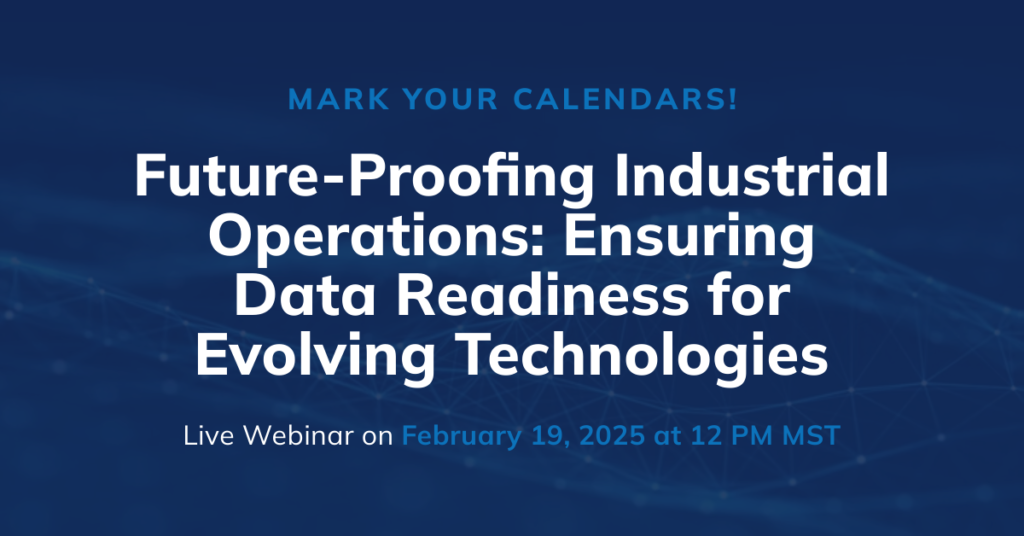
Ready to learn how to overcome your organization’s barriers? Watch our webinar, Future-Proofing Industrial Operations: Ensuring Data Readiness for Evolving Technologies, moderated by Andrew Capper. Gain actionable insights and strategies to build future-ready data systems.


Register for the Webinar replay here.

Sarah Burghardt

CPHR President

Read Bio

Sarah Burghardt is the President of Dexcent, responsible for the day-to-day leadership of the organization, enabling strong execution across teams and delivering exceptional value to customers. With a track record of building high-performing teams and strengthening delivery capability, she has been an integral part of Dexcent’s growth and evolution. Sarah is known for a leadership style grounded in authenticity, clarity, and collaboration, consistently embodying Dexcent’s core values of Integrity, Care, and Excellence. She brings experience spanning executive leadership, consulting, and business operations, helping organizations align people and priorities to achieve meaningful outcomes. 

Andrew Capper

Vice President of Industrial Digital Transformation

Read Bio

Andrew Capper is Vice President of Industrial Digital Transformation at Dexcent, helping industrial organizations improve data-driven decision-making by optimizing the data journey, reuniting siloed information, and delivering a trustworthy version of the truth.

With more than 25 years of experience, he is known as a results-driven leader who delivers on commitments and tackles complex information management challenges with a practical, human-centric approach. His work spans digital transformation strategy and roadmaps, governance, digital maturity assessments, and performance measurement through clear KPIs and metrics. Andrew is a NAIT graduate with training in Instrumentation Engineering Technology and Security Systems, and he brings a strong focus on safer, more effective operations from data producers through to data consumers

Nader Asgharinia

MP, P.Eng.

Vice President of Enterprise SCADA & Advanced Applications.

Read Bio

Nader Asgharinia, PMP, P.Eng., is Vice President of Enterprise SCADA & Advanced Applications at Dexcent, leading the delivery of complex, mission-critical solutions with a clear focus on client experience and operational excellence. With more than 30 years in business execution and over 25 years managing multi-million-dollar programs for mission-critical and SCADA systems, he brings a pragmatic, delivery-at-scale approach to every engagement. Nader is recognized for building high-performing teams, driving disciplined portfolio execution, and delivering measurable business outcomes, including significant growth in program portfolios and team capacity over time. He holds a B.Sc.(Hons.) in Electrical and Electronics Engineering from the University of Newcastle-Upon-Type in the UK, a B.Sc. in Computer Science from the University of Calgary, completed Georgetown University’s Director’s Program, is a Professional Engineer in Alberta, and a Project Management Professional.

Gerrit Nel

CISSP, CISM – Vice President of OT Infrastructure and Cyber Security Services

Read Bio

Tobias (Gerrit) Nel, CISSP, CISM, is Vice President of OT Infrastructure and Cyber Security Services at Dexcent, leading the development and delivery of practical services and solutions that integrate, complement, or replace OT infrastructure and protect OT assets from cyber threats. He is known for building resilient security frameworks, governance processes, and integrated solutions that reduce risk and support compliance across diverse industries. Gerrit has over 40 years of relevant IT/OT experience and has built and delivered highly skilled and high-performance delivery teams. His strengths include Cyber Security roadmaps, security architecture, incident response, and alignment to standards such as IEC 62443, NIST, and NERC CIP. Furthermore, he has deep foundational technical experience in Networking and OT infrastructure systems architectures that he leverages in building and leading successful delivery teams. Gerrit holds a B.Sc. in Computer Science from the University of Johannesburg and brings deep cross-sector experience supporting clients in oil and gas, mining, chemical, healthcare, financial, and government environments.

Jaydeep Deshpande

P.Eng. – Chief Strategy Officer (CSO)

Read Bio
Jaydeep Deshpande, P.Eng., is Chief Strategy Officer at Dexcent, where he helps shape the company’s future by connecting strategy, innovation, and execution. Having led Dexcent as President for six years, he combines 28 years of experience with a deep understanding of what it takes to scale a business while staying true to its culture and purpose.
 
Known for his people-first leadership and ability to navigate complex transformation, Jaydeep plays a central role in advancing Dexcent’s strategic priorities, strengthening key relationships, and unlocking new growth opportunities. He brings a disciplined yet human approach to change, aligning teams, accelerating growth, and ensuring the organization evolves with clarity and intent. He is passionate about building strong teams, fostering a culture grounded in integrity, care, and excellence, and positioning Dexcent to create lasting value for its customers, people, and partners.
 
He holds a Bachelor of Science in Engineering from the University of Alberta, is a Prosci Certified Change Practitioner and a Project Management Professional (PMP), and completed the CMA Accelerated Accounting Program, complemented with more than 20 years of financial management expertise.

Karim Amarshi

Chairman of the Board

Read Bio

Karim Amarshi is Chair of Dexcent’s Board of Directors, providing governance leadership and strategic oversight to support the company’s long-term strategy and executive team. With nearly 40 years as an entrepreneur and owner-operator, he is recognized for building high-performance organizations and forging strategic alliances across Information Technology, government, health care, education, and energy. He is the former co-owner and Chief Executive Officer of one of Canada’s leading enterprise Information Technology solution providers, where he led the organization through three successful mergers and helped scale long-term client and vendor partnerships. Karim remains active across a diverse business portfolio, serving as a founding principal, officer, and advisor to organizations spanning Information Technology, hospitality, manufacturing, retail, and real estate in Canada and internationally.

Yasmin Jivraj

FCIPS, I.S.P. | Board Member

Read Bio

Yasmin Jivraj, FCIPS, I.S.P., is a Board Member at Dexcent, providing executive guidance and strategic oversight to support corporate management and long-term business direction. Over a 35-year career, she has held senior leadership roles across private, public, and non-profit organizations, with a track record of building operating foundations and driving profitable growth. Following a 15-year tenure as a co-owner and President of one of Canada’s leading strategic Information Technology solution providers, she expanded her governance leadership through active board service in post-secondary education and community-focused organizations. She is recognized for decisive, purpose-led leadership, clear communication, and deep expertise in technology, business models, and methodologies that help enterprise organizations advance digital transformation.

Nadir Jivraj

CEO, Board Member

Read Bio

As Chief Executive Officer, Nadir is accountable for providing overall leadership and Dexcent’s Industrial operational performance. Nadir has been involved as an executive sponsor with Oil & Gas and Mining companies for over 35 years, and through the years has developed a strong working relationship with the Executive leadership team of many Fortune 500 companies.

Nadir is known for recognizing value and superior investment opportunities in the technology services sector. His pursuit of highly prospective technology companies around the world has resulted in numerous company start-ups. Prior to starting Dexcent, Nadir had led companies through highly profitable business transactions, including the merger of Atlas Systems Group with CompCanada (later renamed Acrodex) in 2000 and later as Chairman of the Board of Axcend Pvt – an engineering solutions provider – based in Bangalore, India from 2004 – 2014. Acrodex and Axcend were sold in 2015