
Better Dashboards, Same Decisions: What Industrial Leaders Are Still Missing
Industrial organizations have invested heavily in visibility, yet many still struggle to make faster, more confident decisions.
More dashboards. More trends. More reporting layers. More access to operational data. In many environments, leaders can see more than they could a few years ago.
And yet the same friction often remains.
Teams still hesitate. Decisions are still slow. Response paths still depend on manual interpretation, informal workarounds, or debate over which number is right.
That disconnect is easy to miss because dashboards create the appearance of progress. Information is visible. Metrics are displayed. Exceptions are easier to spot. The environment looks more informed.
But better visibility does not automatically create better decisions.
That is one of the most expensive misconceptions in industrial digital transformation.
When decision-making does not improve after reporting improves, the problem is usually not the dashboard itself. The real issue sits further upstream, in the conditions that shape whether the organization can trust, interpret, and act on what it sees.
A dashboard can display information.
It cannot resolve uncertainty around the information underneath it.
When Visibility Improves, but Action Still Slows
This is a familiar pattern in industrial environments.
A new reporting layer is introduced. Leaders gain easier access to trends and KPIs. Operational exceptions become more visible. Meetings feel more data-rich. The organization expects decision-making to become faster and more consistent.
Instead, a different pattern emerges.
Teams still debate which number is right. Operations, engineering, and reporting may all be looking at the same issue through different inputs. A trend may be visible, but confidence in the interpretation is weak. A dashboard may flag a problem, but the response still depends on manual reconciliation, local context, or informal workarounds.
The organization has gained visibility, but not enough confidence to act faster.
That gap is costly because leadership sees progress in reporting while the operation still experiences hesitation, rework, and uneven response.
This is why some dashboard investments feel helpful without becoming transformational. They improve access to information, but they do not solve the deeper conditions that make information usable in live operations.
The Problem Is Not Visibility Alone
Dashboards are often asked to solve the wrong problem.
They are treated as if they can create alignment, trust, and operational clarity on their own. In reality, they are only as strong as the data ecosystem and governance behind them.
If the source data is fragmented, the dashboard reflects fragmentation.
If ownership is unclear, the dashboard does not create accountability.
If the organization lacks shared trust in definitions, timestamps, or transformations, the dashboard does not remove that uncertainty. It simply displays it more clearly.
This is why some organizations keep improving dashboards while still struggling with the same decisions.
The reporting layer gets stronger.
The operating conditions underneath it do not.
That distinction matters because it changes where industrial leaders should focus. When better reporting does not produce better action, the next move is not always another dashboard improvement. It is often a closer look at what the dashboard depends on.
What Is Actually Breaking Down Beneath the Dashboard
When dashboard-driven decision-making stalls, the issue usually comes from one of four places.
1. The Data Is Fragmented
Information may come from historians, SCADA records, spreadsheets, logs, business systems, and manual inputs that do not connect cleanly enough to support one reliable picture.
2. The Logic Is Not Fully Trusted
Teams may question how the numbers were transformed, how recent they are, or whether the dashboard reflects the way the operation is actually being run.
3. Ownership Breaks Down
The dashboard can surface the issue, but not always clarify who is responsible for validating it, responding to it, or correcting the conditions behind it.
4. The Response Never Fully Settles Into Daily Work
Even when the signal is visible, action can still stall if supervisors, engineers, or operators are not aligned on what the signal means and what should happen next.
This is why dashboards often expose the real maturity problem instead of solving it.
They make gaps easier to see, but they do not close them.
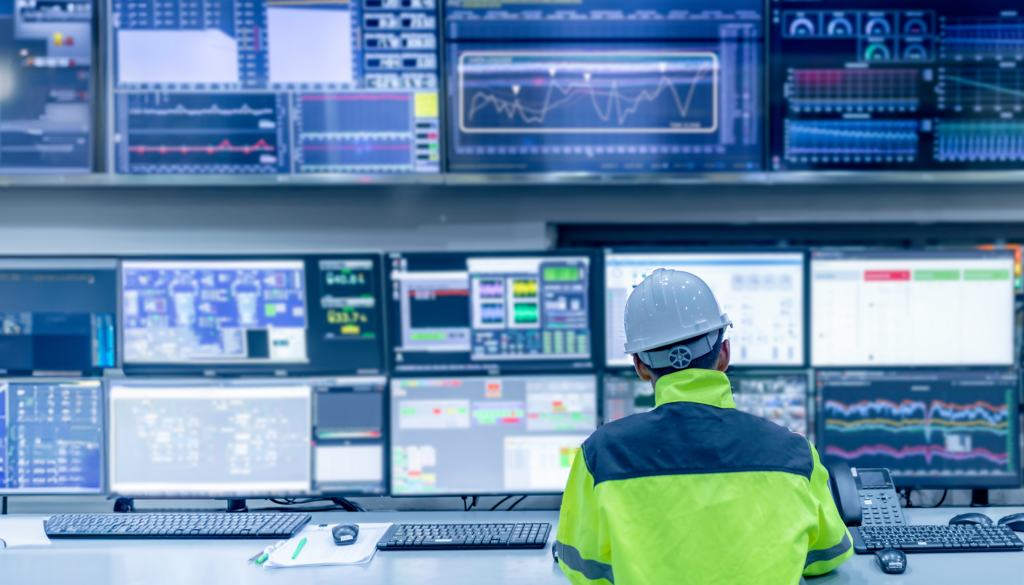
Why This Matters More in Industrial Environments
In industrial OT and ICS environments, decisions have to hold under real operating pressure.
That means visibility is not enough on its own. The organization also needs confidence, coordination, and repeatability. If a dashboard highlights abnormal energy use, a production issue, or a reliability concern, teams have to know they can trust the signal and act on it consistently. That requires more than a good interface.
It requires a dependable chain from source to action.
That chain is where many organizations struggle.
A dashboard may look polished in a meeting room while the data beneath it still depends on inconsistent manual steps, unclear transformations, or local knowledge that has never been formalized. In that environment, the dashboard does not become a source of confident action. It becomes another layer that has to be interpreted carefully.
That is not a reporting problem.
It is a foundation problem.
What Better Decision-Making Actually Depends On
If the goal is better industrial decision-making, the real objective is not more visibility alone. It is usable, trusted visibility.
That requires stronger conditions in at least three areas.
1. A Data Ecosystem That Supports Context, Not Just Access
The organization needs more than data availability. It needs information that moves consistently from source to decision, with enough context that teams can interpret it correctly.
2. Governance That Makes the Data Trustworthy
Ownership, definitions, transformation logic, and access rules have to be clear enough that teams are not debating the basics every time an issue appears.
3. Routines That Turn Insight Into Action
A signal has to trigger a reliable response. That means the decision path, the ownership, and the operating behaviour around the signal must be understood and reinforced.
This is where many industrial organizations discover that reporting maturity and decision maturity are not the same thing.
A dashboard can improve the first.
It cannot guarantee the second.
The Better Question for Leaders
When reporting improves, but decisions do not, many organizations keep asking how to improve the dashboard.
That is usually the wrong question.
The better question is, “What is preventing this insight from becoming confident action?”
That shift changes the conversation.
It moves attention away from the interface and toward the environment supporting it. It helps leaders identify whether the issue is fragmented data, weak trust, unclear ownership, inconsistent response patterns, or some combination of all four.
That is a far more useful diagnosis.
It also creates a more credible path forward, because the organization can improve the conditions that make visibility valuable instead of only improving how the visibility looks.
This is where Dexcent’s perspective is useful.
Dexcent approaches industrial digital transformation as more than reporting, integration, or platform modernization. The work is about helping organizations understand where operational decisions are being slowed by fragmented data, weak governance, infrastructure limitations, or adoption gaps, and then building a more practical path forward.
That is how visibility becomes operational value.
What Success Looks Like
Success is not a better dashboard by itself.
It is a decision environment where the right people can see the signal, trust the signal, and act on it without unnecessary delay, rework, or confusion.
It is visibility backed by clarity.
It is data backed by accountability.
It is reporting backed by operating discipline.
That is what industrial leaders actually want when they invest in visibility.
Not more screens.
Better decisions that hold in live operations.
If your organization keeps improving dashboards but still sees friction in how decisions are made, the issue may not be the reporting layer. It may be the conditions underneath it.
That is a much more valuable issue to identify early.
Where to Go Next
If this pattern feels familiar, Dexcent’s eBook, From Ambition to Impact: A Practical Guide to Digital Transformation in Heavy Industry, explores the broader conditions that shape whether visibility, reporting, and digital initiatives actually translate into operational results.
And if your organization is already working through these issues, a focused conversation with Dexcent can help clarify whether the bottleneck is the dashboard itself, the response path around it, or the conditions underneath it, and what to strengthen first, so better visibility leads to better action.